

Know Your Numbers: The Power of Blood Pressure Monitoring
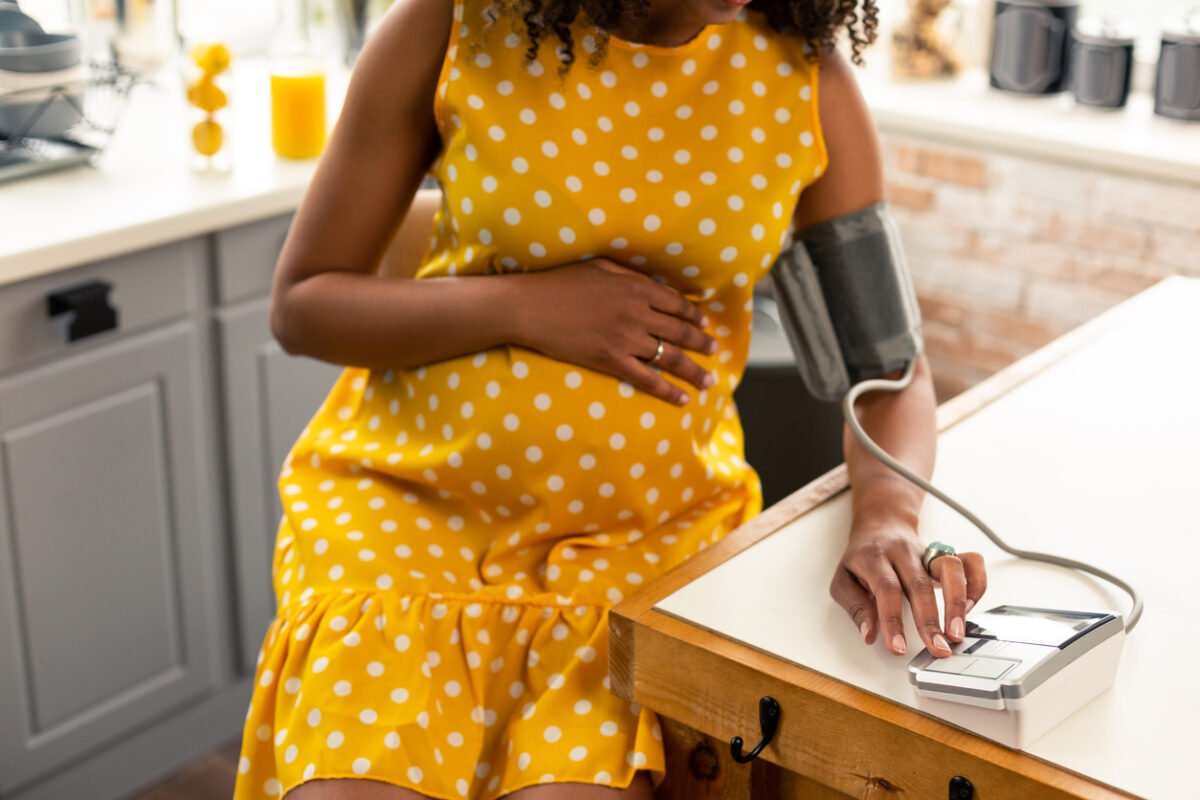
Blood pressure is the force of your blood pressing against your artery walls as your heart pumps. Every heartbeat sends blood into your arteries, creating two numbers that make up your blood pressure reading. The top number, called the systolic pressure, shows how hard your heart is working when it contracts. The bottom number, the diastolic pressure, measures the pressure when your heart is resting between beats.
For people with low cardiovascular risk, blood pressure is usually checked at each prenatal appointment. Still, many providers now recommend checking your blood pressure at home—both during pregnancy and after giving birth—so you can catch early signs of concern.
Why High Blood Pressure Matters
High blood pressure (also known as hypertension) is one of the leading causes of pregnancy-related complications in the United States. Several conditions fall under hypertensive disorders of pregnancy, including chronic hypertension, gestational hypertension, preeclampsia, and HELLP syndrome. These conditions can affect both parent and baby, increasing the risk of early delivery, low birth weight, stillbirth, stroke, seizures, organ damage, and complications during childbirth.
In the U.S., an estimated 6%–8% of pregnancies among people ages 20 to 44 are affected by hypertension. The good news? Many hypertensive disorders of pregnancy can be prevented or treated when caught early.
When & How Often to Check Your Blood Pressure
Your provider will guide you on how often to check your blood pressure at home. Depending on your health history, you may be asked to check it daily, weekly, or anytime you notice symptoms that don’t feel normal for you. You might also be asked to keep track of your readings in a blood pressure log.
Warning Signs of High Blood Pressure or Preeclampsia
Contact your provider right away—or seek urgent care—if you experience:
Feeling “off” or unlike yourself
Sudden, severe headache
Vision changes (blurriness, seeing spots, flashing lights)
Intense, persistent pain under the right ribs
Sudden swelling in your face
How to Take Your Blood Pressure Correctly
To get the most accurate reading at home:
Sit upright in a chair with your back supported
Place your feet flat on the floor
Keep quiet while checking your blood pressure
Rest your arm on a surface at heart level
Take a few deep breaths and relax for a few minutes
Press start on your blood pressure monitor
Record your reading in your log
When to Seek Medical Care
You should get medical help if:
You have any of the warning signs listed above
Your blood pressure is 140/90 mmHg or higher twice within 4 hours
Your blood pressure is 160/110 mmHg or higher twice within 5 minutes—this is an emergency
Go to the ER immediately
Notify your OB team as soon as possible
Staying aware of your blood pressure is one of the simplest and most powerful ways to protect your health during pregnancy and the postpartum period. Regular monitoring can help you catch early changes and get timely care when you need it. If you ever feel unsure, trust your body—and reach out for medical support.
If you need a home blood pressure, we can provide one to you. Please Contact us